



15 'specials', not to miss in the
El Cabrón Marine Reserve,
Gran Canaria
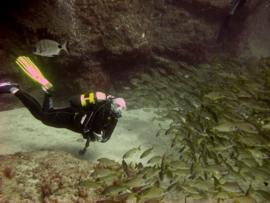
With over 400 marine species in the reserve, it is impossible to display all of them on one page. We have selected the top 15 most impressive species from the reserve to give you a flavour of the awesome sights you can enjoy when diving with us.
For a more comprehensive site showing photos of a huge selection of
the marine life in Gran Canaria look at either our Photo Gallery from the
menu on the left, or Gran Canaria Diving
.Com
Pearly Razorfish
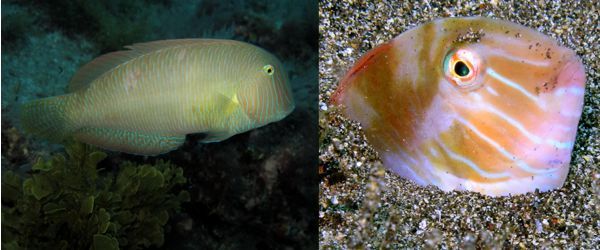
The Pearly Razorfish (Xyrichtys novacula) are friendly fish found in sandy areas, where they feed on tiny invertebrates in the sand. If scared, they disappear rapidly into the sand, head first, but then emerge slowly after a couple of minutes.
Canarian Lobsterette
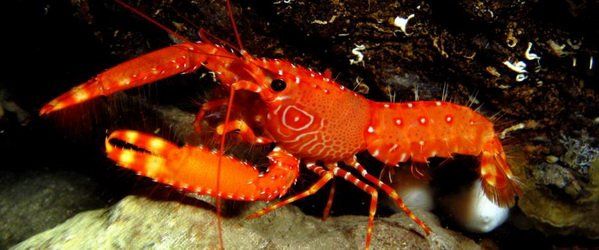
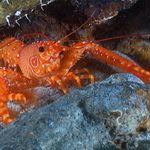
The Canarian Lobsterette (Enoplometopus antillensis) is found at night or in dark recesses and caves during the day, this brightly coloured species is immediately distinguished by the white rings on its side. It is also worth checking for the Cape Lobster as often these can be found in similar environments. In the El Cabrón area there are several caves where we may see them in the day, as well as on night dives.
Angel shark
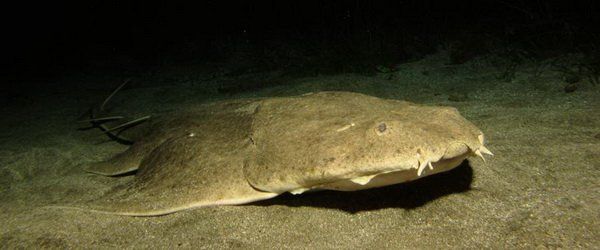
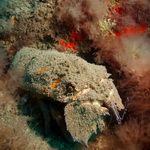
The Angel Shark(squatina squatina)is usually singular, and are more commonly found in spring and early summer, when they often wait by day covered in a thin layer of sand. They are not aggressive if they are not disturbed and will generally avoid contact with divers, making them very safe to dive with. They prefer the sand to the rocky outcrops and can grow up to 1.5m long. We have been studying these amazing creatures for several years and we have a separate page devoted to Angel Sharks and the results from the surveys we carried out in conjunction with the University of Las Palmas. The El Cabrón marine Reserve and Sardina del Norte are two of the best places to see these Critically Endangered sharks.
Spiny Pufferfish
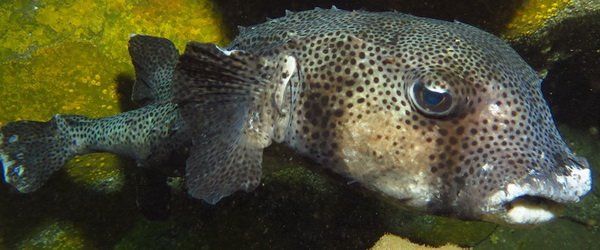
The Spiny Pufferfish (Chilomycterus atringa) is a dramatic looking species, who have been increasing in numbers in Arinaga over the last five years. The biggest adults are almost 90cm long and they prefer to seek out their favourite food - sea urchins, at night, when the urchins are more active. During the day they retire to carefully selected corners, which usually have a good view so they can see any likely predators. The El Cabrón are is the best place on Gran Canaria to see these during the day.
Hairy Blenny
Marbled Electric Ray
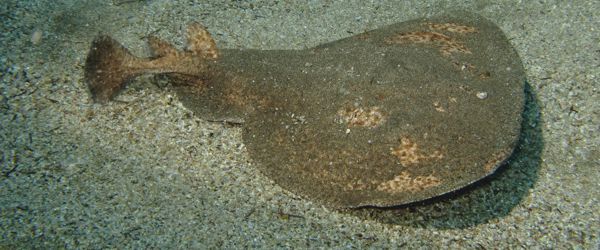
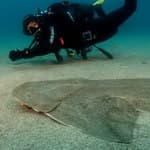
The Marbled Electric Ray (Torpedo marmorata) can be found almost anywhere in the reserve, but are often easily overlooked because of their ability to hide just under the surface of the sand. They can be up to 60cm long and if swimming free display a mottled back which helps them blend into the sand.
Painted Comber
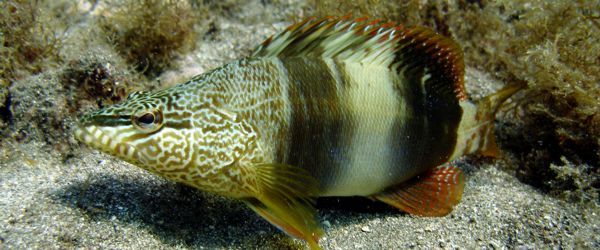
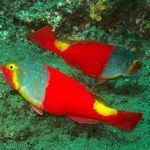
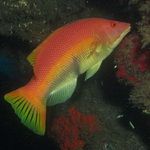
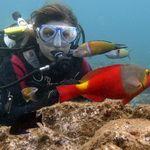
The Learned Rockfish, or Painted Comber (Serranus scriba) lives in rocky areas and can often be found sheltering under large rocks or overhangs. It's vivid facial patterning and trusting nature make this a regular favourite with visiting photographers.
Barracuda
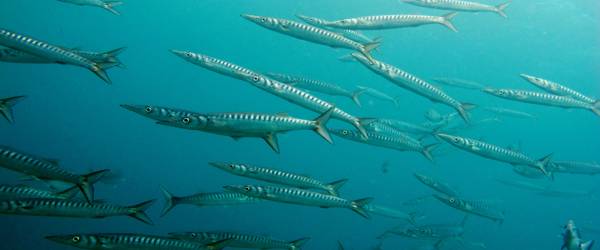
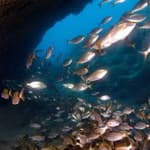
There is a large shoal of Barracuda (Sphyraena viridensis) which lives over the table top and patrols its edges. lone individuals can also be found in other parts of the reserve including the bay.
Hypselodoris picta
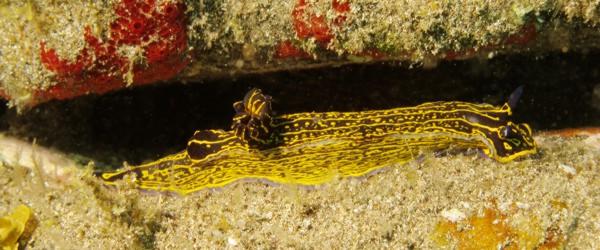
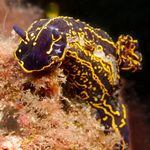
Nudibranchs can be hard to spot unless you know where to look! The most common is the hypselodoris picta which appear in early spring and then through the summer, but also look on the yellow sponges for the tiny yellow golden sponge snail, or under rocks for either berthela or madeira sea-slugs. Other species turn up including a blue 'midatlantic' nudibrach and the purpurea nudibrach!
Cuttlefish
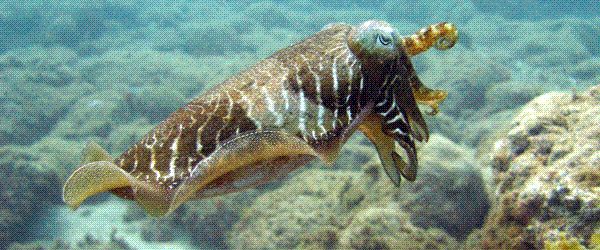
The African Cuttlefish (Sepia officinalis)looks like a small hovercraft with it's pulsating 'skirt' and gentle motion, usually hovering a few cm above the bottom. Like the Octopus, it has the ability to quickly change it's colour to blend in with the background or flash messages to each other.
Common Stingray
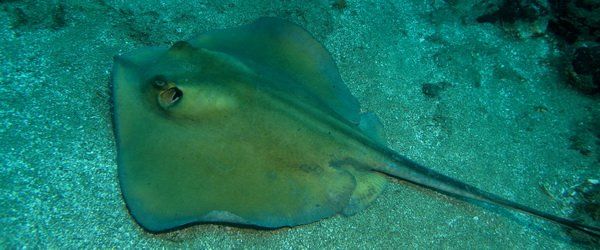
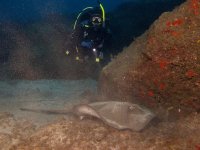
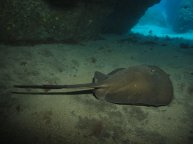
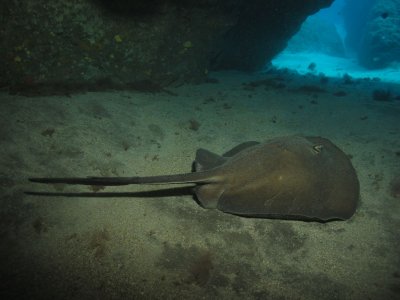
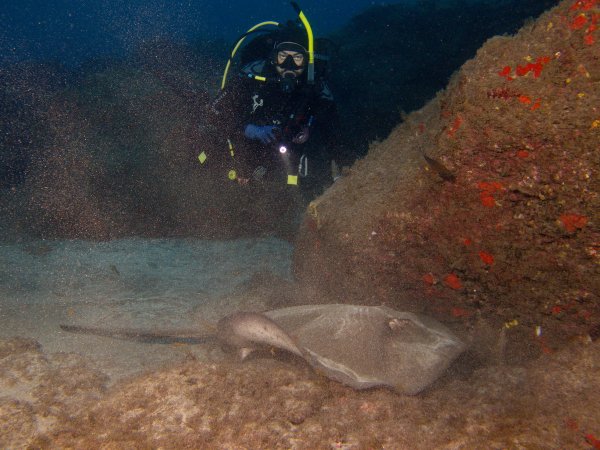
The common (or yellow) stingray (Dasyatis pastinaca)is found in the sandier areas of the reserve. In summer it is more commonly found at night, while in winter it comes into shallow areas to follow the spawning of smaller species, and to give birth to their young.
Glass-eye
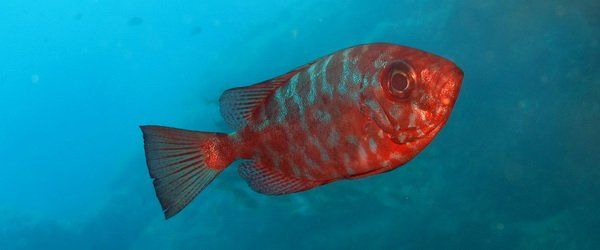
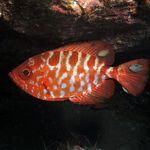
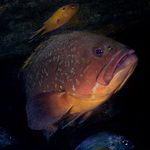
The Glass-Eye or Catalufa (Heteropriacanthus cruentatus) is one of the most striking fish in the marine reserve. Primarily nocturnal, they can be found in most of the caves in Arinaga during the day. Usually found at depths of 10m or more, where the shorter wavelengths of light have been absorbed, shining a torch, or using a flash on the camera is necessary to bring out the red colours of this nocturnal species.
Round ray
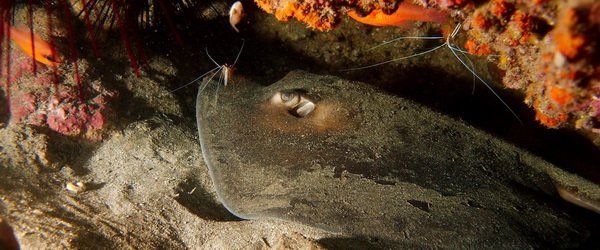
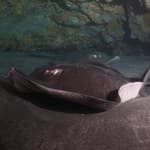
The Round Stingray (Taeniura grabata) is often found in caves or under large rocks during the day. It is more of a grey/black than the lighter yellow stingray.
Seahorse
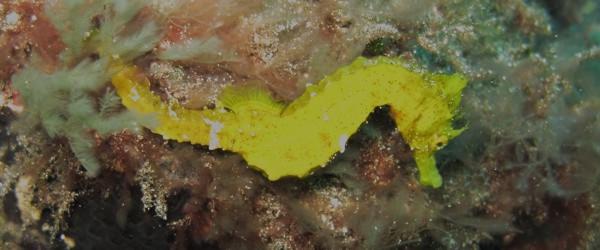
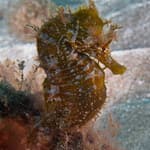
The Seahorse (hippocampus hippocampus) is very difficult to find, although they will often stay in a small area for a few weeks before moving on. The population has declined sharply over the last 50 years, and more actions are being taken to protect their habitat.
Butterfly Ray
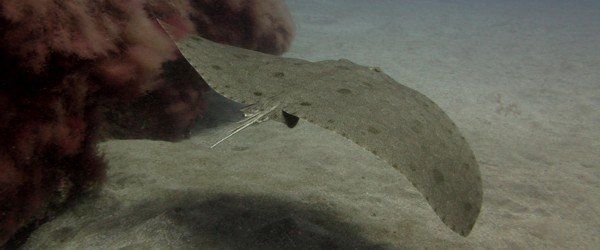
The Butterfly Ray (gymnura altavela) is very one of the largest rays in the canaries with a wingspan of up to 2m, but it's activities are mainly nocturnal. During the day, if we are lucky, we can find them asleep in the sand, they cover themselves with sand in the same way as angel sharks. If you are lucky enough to see one swimming it has a highly individual asynchronous finning motion where it uses the wings alternately.
Grey Triggerfish
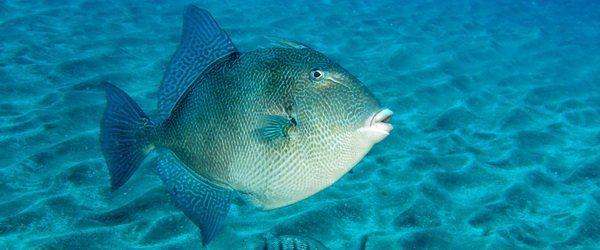
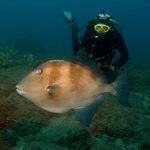
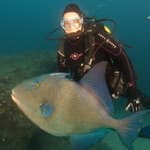
The Grey Triggerfish (balistes capriscus) is a summer visitor to the el Cabrón area, and often seem to create a 'nest' area. They are quite curious and will approach divers, and swim very close to us, but if you get too close to their area they can be very aggressive and have been known to bite divers!
Tiger Moray
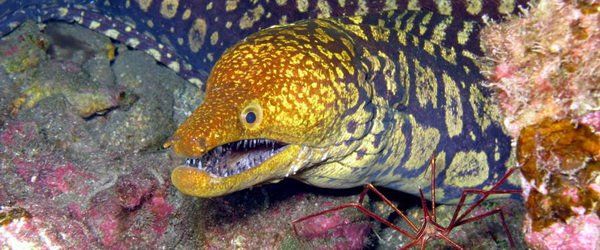
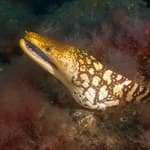
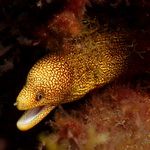
The Tiger Moray Eel (enchelycore anatina)is found throughout the
reserve and is a favourite with photographers. These Morays are one of four types found in
Arinaga and are very common on the deeper dives around the Table Top.
Sorry! but with so many interesting creatures in Arinaga it was hard to keep to just 15... so we gave you a couple of extras! We could of course have included the Spiny pufferfish, eagle rays, bull rays or long-tailed rays; It is always great when we find a scrawled filefish, an adabe capitan and even the tiny pygmy file-fish on which we base our logo.. Yes there is lots that you can see here in Arinaga, so don't be persuaded that other sites in the area are a match for here, as nowhere else has the habitat diversity to encourage such a vibrant marine life.
If you found this interesting, have a look at Birds and Animals found underwater in Gran Canaria on our blog - 'Gran Canaria Diving hints and tips'.

NO Deposit, Cancellation or Change fees!